
the editing process
retta reached out a couple days ago with a photo of zinnias. she’d sent a bunch of other photos a couple weeks before, too. photos of the family house being constructed in the eighties, of her beloved grandmother who trekked by covered wagon to kansas. photos of her children at different ages and her garden in full bloom.
(there was also a particularly grainy photo of a massive pumpkin, a bragadocious snap perhaps meant to communicate unusual fertility. ha!)
these photos had arrived a few days after i had already edited the first version of retta’s portrait.
but despite the lazy devil voice inside saying to just leave the old one be, i knew these old pocked rectangular memories were important, and would bring retta’s words even more life~ providing viewers with hard won imagery from the real world to replace what had previously been our imprecise imagination.
so today, opened back up the edit for another pass.
a little background: the editing process for a documentary portrait actually begins when one decides what to film. the choices are infinite, and so choosing a person eliminates everyone else. next, once in the presence of the person, there are the actual moments the record button is pushed. even with a simple task, like clearing garden beds, the multitudes of locations where a camera can be placed can be paralyzing. why place it here, and not there? why hit record now, and why hit stop later? what story are we telling here? when is it enough footage? should we do a time lapse?
(after twenty four years of filming portraits, i still know little, and as always, the inner voice ultimately guides the way.)
during the interview, the questions asked are also part of the editing process. what is the main thing we’re getting at? when do we have enough to capture a person’s essence on that particular day?
with any film, only the smallest fraction of a fraction is ever seen. if it’s done well, it feels like a magic trick in which a only glimpse is given, but the entirety of a life stage is revealed.
once filming is done, the editing continues. footage is uploaded to the comupter, and then laid out on timelines. usually, it starts with what is called a ‘radio’ cut. this just means only the interview is reviewed. with retta’s portrait, there was close to an hour of incredible wisdom shared. it can be just as paralyzing to know which parts to include in a portrait. why the story about the grandmother? should the legal difficulties be included? and once the moments have been chosen, what’s the order to place things?
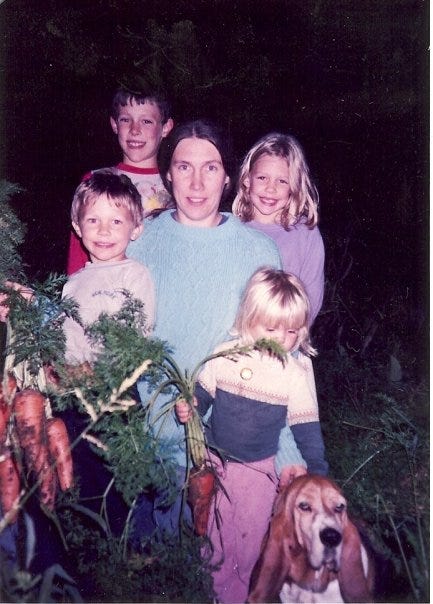
eventually the radio cut is widdled down more and more, as “umms,” “you knows,” and stuttered syllables are cleaned up. the idea being to crystallize the spirit of what is being said, and to allow the viewer the ability to focus. once these edits are done, new seams appear. jumpy spots are generally to be covered with the verite footage. a sudden flash of intuition will pair a visual moment with a spoken thought. for instance, in this edit, the photo of retta with her kids and the carrots (above) felt right as she talked about her lifelong commitment to homeschooling. not sure why, just instinct.
anyhoos, that’s a little peek behind the curtain of the editing process, and to be honest, if there was no deadline i could probably keep futzing with things forever. but this is the latest version of retta’s portrait, this time with some photos. and with a few other minor changes. will this be the last?
perhaps, unless retta sends some more photos… ha!
best thoughts,
graham
p.s. happy father’s day to all the dads out there, and happy father’s day to my wonderful dad, heath!
p.p.s. paid subscribers can scroll down to see the latest version of retta’s portrait.
